What Data Can Actually Do for a Water Polo Team
Baseball had Moneyball. Football has Brentford and Bournemouth. Water polo has neither the data culture nor, yet, the raw data to get there easily.
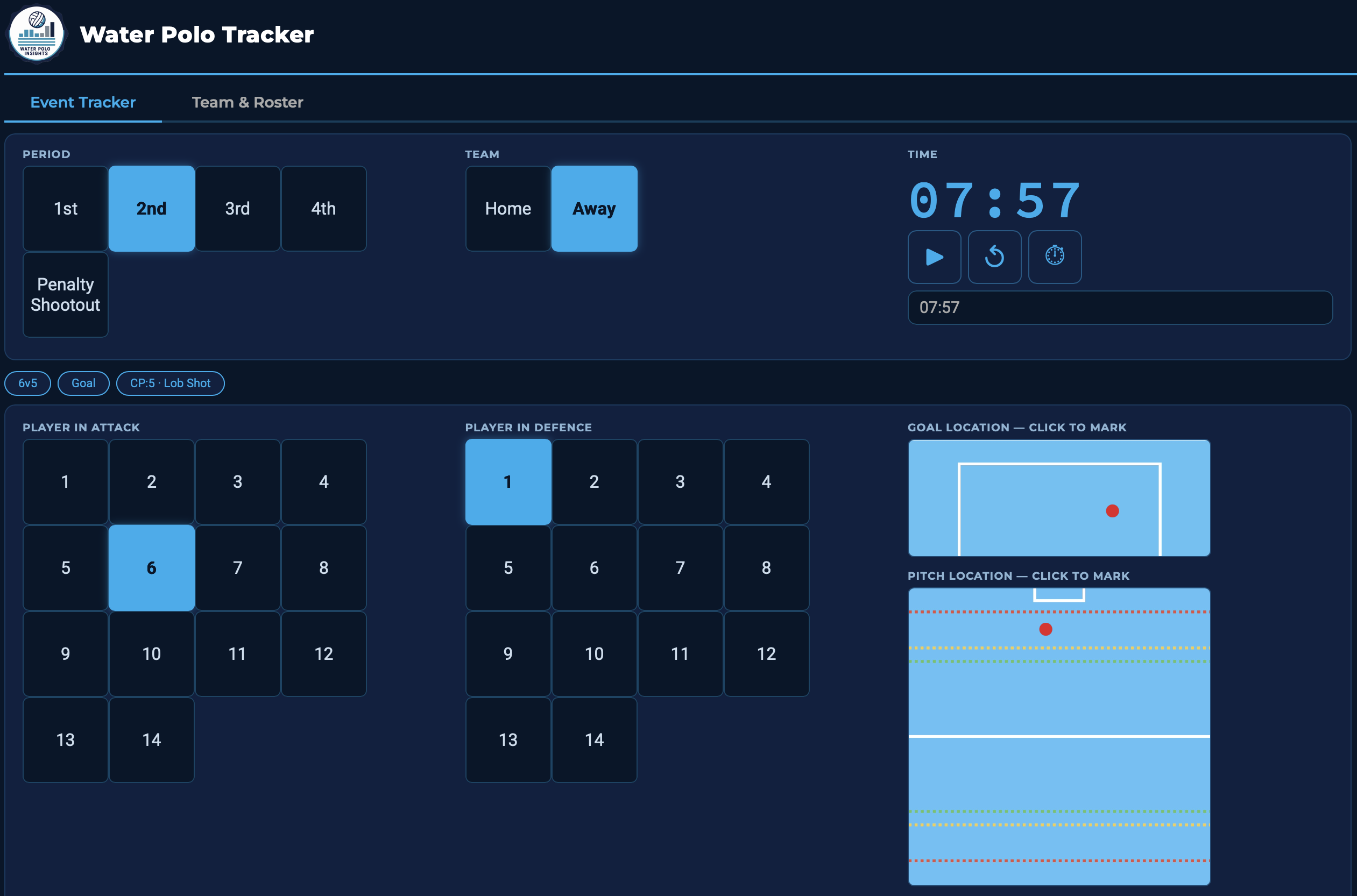
I've spent a lot of time building a statistics dashboard meant to give an advantage to any water polo team that uses it. It's worth explaining why I think that's a genuinely valuable resource, what I think these systems still need to get right, and what's currently holding water polo data back from being as useful as it could be.
The Moneyball precedent
The modern story of data in sport usually traces back to the Oakland Athletics' "Moneyball" approach in baseball, since immortalised in a book and film. Facing one of the smallest payrolls in the league, the Athletics built a statistical model to find players the market had mispriced, rejecting the traditional scouting approach most clubs relied on at the time. The result was a 103-win season and a record 20-game winning streak, achieved with a roster that looked, from the outside, far weaker than most of their rivals. They didn't go on to win the World Series that year, but the approach reshaped how the sport thinks about value.
The obvious objection for water polo is that baseball is a fundamentally different, far more static sport, and lends itself to this kind of analysis in a way water polo doesn't.
A closer parallel
I'd point instead to Bournemouth and Brentford in the Premier League. Both clubs have ownership structures that place real value on data, with internal models helping shape decisions from scouting to tactics. Both have had a meteoric rise toward and into the Premier League. Neither rise can be put down solely to a data-based approach, but it doesn't look like a coincidence that both happened at the same time. Football, like water polo, is an active, chaotic sport that doesn't obviously lend itself to quantitative study at first glance. That may be exactly what makes it a strong candidate for data analysis, given how much of the existing conventional wisdom rests on insight alone. Data can challenge those assumptions directly, so that established knowledge is given the respect its years of accumulation deserve, without being treated as dogma.
Two extremes to avoid
Reading across from other sports, data looks like a genuinely promising way for a team to outperform sides that would traditionally be much stronger. The harder question is how a club should actually implement a data-based decision structure. I think the important thing is staying balanced between two extremes.
On one side is the club that tries to quantify everything, where every decision is driven by data and the eye test is discounted entirely. This tends not to work well, largely because of a real difficulty in specifying, in data, exactly what a footballing or water polo concept actually means. Language itself resists that kind of precision, and there's always some slippage between what the data represents and what it's actually meant to capture. Clubs taking this approach often end up frustrated: a huge amount of effort goes into processing the data, only for the output to fall short of what was expected of it.
On the other side is the fully traditional approach, which clearly lacks the insight data can provide. A simple script, let alone a proper model, can hold and process far more data points than any person could carry in their head, and that scale allows for a kind of analysis that's arguably different in kind from what a human alone can do, not just faster.
Both extremes are best avoided. The more sensible approach is a slow, deliberate integration: bringing data into a club's processes gradually, and only where it's genuinely useful and the benefit is clearly visible.
Why water polo data is harder to build
There are challenges specific to collecting water polo data that don't apply to football in the same way. Football has always had data available, and plenty of people watching closely enough to generate it, largely thanks to the betting market. Water polo doesn't have anywhere near as many eyes on it. Reliable footage is harder to find, and there's simply less data available in general.
Statistic collection from games already varies a great deal by league and quality. Even the best available data isn't fully reliable, and it's genuinely hard to find people to verify data that was difficult enough to collect in the first place. Poor data quality is a real problem: analysis built on incorrect inputs produces incorrect insights, however sound the method. Right now, the only data of real use tends to be limited to the top of the sport, Champions League clubs and Olympic teams.
Two things would need to happen for that to change. Top clubs could keep taking data seriously and keep finding success with it, which would create a knock-on effect further down the water polo pyramid. Or the shift could come from the bottom up, which would need a real change in how water polo data gets collected in the first place, potentially through automation like computer vision (software that automatically tracks players and the ball from raw match video, rather than a person tagging events by hand).
Water polo is unusually difficult to analyse this way, though. The ball and the players disappear underwater, and match footage is often too low quality to reliably identify players or the ball throughout a game. These are solvable problems, and I'd expect them to be solved over the coming years, opening up the same benefits from data that other sports, or at least the teams within them willing to use it, have already started to see. The question for any team is whether, and when, it wants to position itself to take advantage of that shift.